
The seven signs of Digital Decay
Digital was meant to make life easier. Faster transactions, simpler services, instant access and more convenient ways to get things done. But somewhere along the way, parts of the digital experience have started to work against the people they were designed to help.
Why explore ‘Digital Decay’?
In our work with digital and multi-channel audiences, we have increasingly seen frustration with technology, both online and in everyday life. Accounts required for simple purchases. Apps becoming the only route to everyday services. Self-service shifting work onto the customer. Chatbots standing between people and the help they need.
This sense that digital experiences are getting worse is not new. Cory Doctorow coined the deliberately provocative term “enshittification” a couple of years back to describe how online platforms often become less valuable to the people who use them as commercial pressures take over. The idea has struck a chord because it reflects a wider feeling: technology that was supposed to make things easier can start asking more of us while giving less back.
Our ‘Digital Decay’ research looks at that shift more broadly, across the everyday interactions people have with brands, both online and in real life. We combined exploratory research with a survey of 2,081 UK consumers to understand how widespread these frustrations are and what impact they can have on brands.
“Tech is supposed to make life easier but it actually makes it so frustrating. I often give up.”
UK Consumer, 67
Below we run through the highlights of the seven key frustrations consumers shared with us:
1. Account fatigue
Brands want relationships, but sometimes people just want to get something done. Accounts, passwords, verification and personal data requests can make simple interactions disproportionately demanding.

79% agree there are too many different accounts and apps in everyday life.
“I really don’t like having to set up an account with an online retailer who I probably only use once or twice... it is a hassle tracking login information.”
2. Customer effort increasing, not decreasing
Self-service only works when the customer gets something back. When scanning, ordering, troubleshooting and administration move to the consumer without making things quicker or easier, convenience starts to disappear and value is eroded.

67% feel they are being asked to do tasks a company’s staff would previously have done.
“Companies are cutting costs and making customers do the work, yet products aren’t any cheaper or better.”
3. AI chatbots a barrier to getting stuff done
Automation can work for simple tasks. Frustration grows when it becomes the only route to help and there is no easy way to reach someone who can actually resolve the problem.

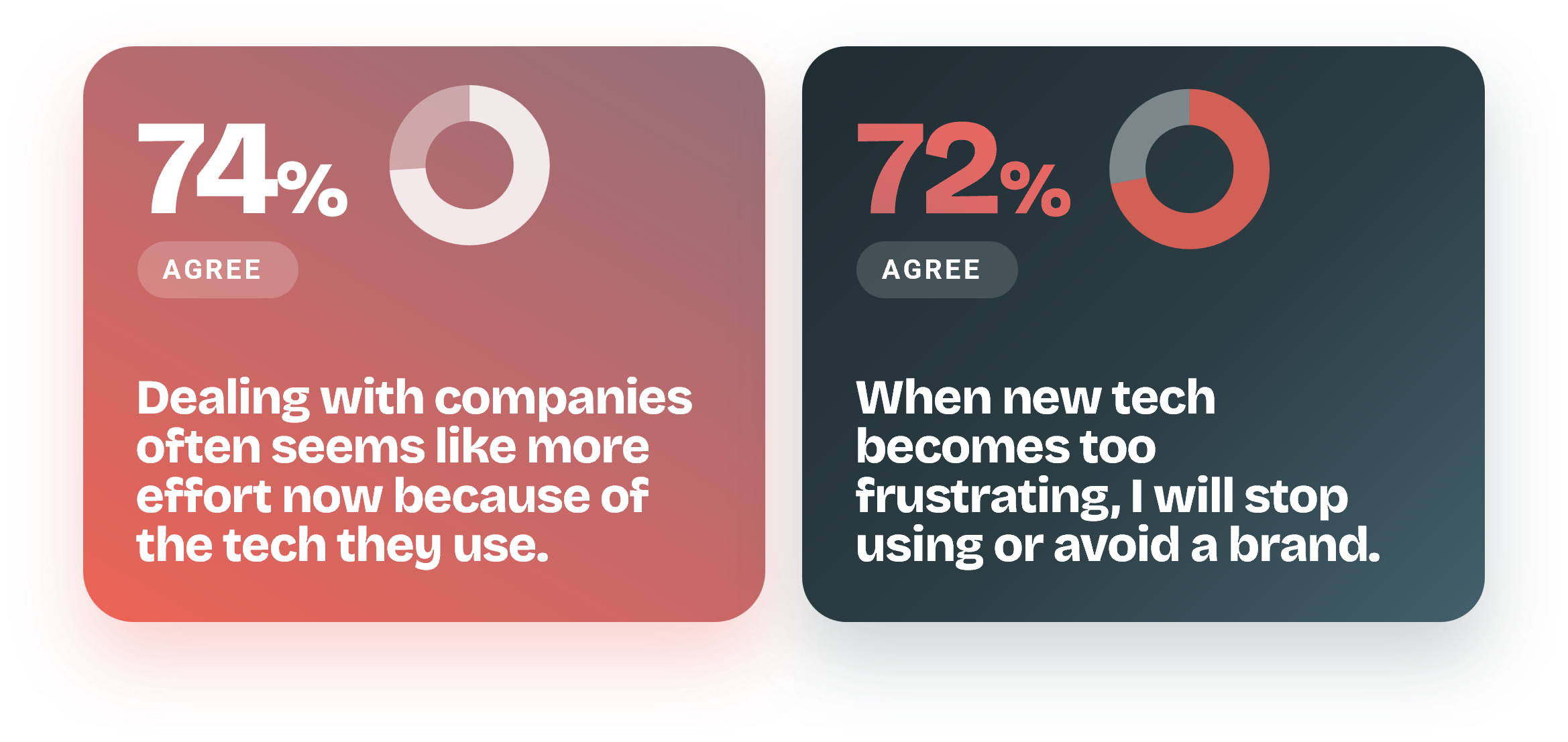
73% would avoid a brand that makes it difficult to speak to a real person.
“You get fed through a list of questions... and go round in circles. It is very frustrating.”
4. Communication overload
Confirmations, updates, promotions, reminders and requests for feedback can turn one interaction into days of contact. More communication can lead to less engagement when most of the messages have little value.

72% agree there are too many emails and notifications when buying or dealing with brands.
“Being sent so many emails... that actual useful or important emails are hard to distinguish.”
5. Apps becoming gateways for simple tasks
Apps can improve experiences, but they are increasingly becoming compulsory entry points to everyday activities. Simple tasks like parking a car, ordering at a cade or using a loyalty card can suddenly depend on a smartphone, registration, connectivity and battery life.

44% have been put off a brand by digital-only requirements in everyday life.
“I only want to download an app that I want to, not because I have to.”
6. Squeezing consumers for more
Consumers are noticing the accumulation of extra asks: charges, subscriptions, add-ons, advertising, tracking and personal data. Individually they may seem small. Together they can make an experience feel increasingly extractive.

61% have been put off by at least one form of the Digital Squeeze.
“I pay for a subscription but still get bombarded with advertising.”
7. Leaving many people behind
Digital experiences often assume everyone has the same devices, confidence, connectivity and ability to adapt. When equivalent alternatives disappear, inconvenience can become exclusion.

56% of people aged 65+ have been put off by digital-only requirements in everyday life, compared with 38% of 18–34s.
“There are things I can’t do any more because I don’t have a smartphone... so I don’t go.”
No just a UX issue but a brand problem
These may look like different frustrations, but the same pattern runs through them: more effort, less choice and less perceived value. That makes Digital Decay more than a UX problem. It can shape how people feel about a business, whether they complete an interaction and which brands they choose.
“It’s frustrating because it just makes everyone’s life harder, including the companies.”
Our full Digital Decay research explores each of these signs in more detail, including the underlying attitudes and behaviours, differences between audiences and the implications for brands designing digital and multi-channel experiences.
If you work for a brand or organisation and would like to see the full findings, please get in touch via the form below to request the full report. We’ll also be sharing more findings on our LinkedIn page and in future blog posts here.